Thursday, February 12, 2009
Look into the Future
Oooh swish! I know this is a little after our time,but this video is still interesting. I don't see anyone going around with lightbulbs attached to their head and telephones attached to their chests.. although, we do have our cellphones. And we do have our cantilever heels ala Marc Jacobs and such.

Sunday, February 8, 2009
Episode 2 : Queen Victoria
Episode 2 is now out! you can download it here:
This week is about Queen Victoria, whom the Victorian time period is named for. I've included this post as a supplement to the podcast including some images of the topics we discussed.
Queen Victoria's Wedding Day. She established the tradition of wearing white.
 The Royal Wedding Shoes. They are made by Gundry & Sons and addressed to the queen on the insole's label. Gundry & Sons, located in Soho Square, London, also made shoes for other royalty.
 Watercolor of Prince Albert by Queen Victoria herself.
 The Royal Family - Queen Victoria, Prince Albert, and 5 of her 9 children.
 Queen Victoria with one of her pet dogs, Sharp. She loved her dogs dearly and had portraits made of them. Sharp was a Border Collie. The Queen is actually smiling a little in the photo.
 Sharp's Grave
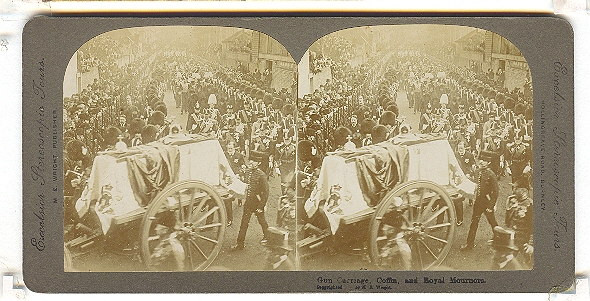
 Stereo view of the Queen's funeral. At front is the coffin follower by hundreds upon thousands of mourners.
  After the podcast was recorded, we realized that we didn't really touch on any of the Queen's accomplishments or influences in today's society. There is so much information about the Queen, it could take a lifetime to study. We wanted to touch on interesting points about her that you didn't know before. If you want to read all about Queen Victoria, I suggest selecting a reading from archive.org about her. If you want to see photos of the family, Victoria's sketches, pictures of the children, please visit Images of Her World. I hope you enjoy this weeks podcast.
This week is about Queen Victoria, whom the Victorian time period is named for. I've included this post as a supplement to the podcast including some images of the topics we discussed.
Queen Victoria's Wedding Day. She established the tradition of wearing white.
 The Royal Wedding Shoes. They are made by Gundry & Sons and addressed to the queen on the insole's label. Gundry & Sons, located in Soho Square, London, also made shoes for other royalty.
 Watercolor of Prince Albert by Queen Victoria herself.
 The Royal Family - Queen Victoria, Prince Albert, and 5 of her 9 children.
 Queen Victoria with one of her pet dogs, Sharp. She loved her dogs dearly and had portraits made of them. Sharp was a Border Collie. The Queen is actually smiling a little in the photo.
 Sharp's Grave
 Stereo view of the Queen's funeral. At front is the coffin follower by hundreds upon thousands of mourners.
  After the podcast was recorded, we realized that we didn't really touch on any of the Queen's accomplishments or influences in today's society. There is so much information about the Queen, it could take a lifetime to study. We wanted to touch on interesting points about her that you didn't know before. If you want to read all about Queen Victoria, I suggest selecting a reading from archive.org about her. If you want to see photos of the family, Victoria's sketches, pictures of the children, please visit Images of Her World. I hope you enjoy this weeks podcast.
Monday, February 2, 2009
Pepsi-Cola
 In light of Pepsi's new logo change. I'd thought it'd be interesting to look at Pepsi's first logotype:
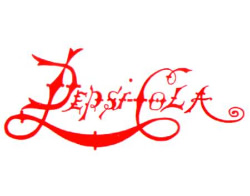 Now that is what I call a typeface. Pepsi was originally called Brad's Drink named after the creator, Caleb Bradham. The logotype was designed by one of Bradham's neighbors. Named Pepsi-Cola in 1989, the name comes from the ingredients pepsin and kola nut. Pepsin is actually an enzyme that helps in digestion. Which is reason why it might have helps as a tonic for stomach aches. The Cola Nut comes from the Kola Tree in Africa. The nuts contain caffeine and can also stimulate the digestion of food in the stomach.
Wednesday, January 28, 2009
Being a Hobo: Lesson 1
I first found out about hobo signs when playing the game Nancy Drew and The Secret of the Old Clock. If anyone still plays computer games and likes solving mysteries, I'd recommend it. It's placed back in 1930 like when the original book was written. I'm just a true Nancy Drew fan. Onto the topic, Hobo signs were used by hobos to tell other hobos things. These signs were written on fence posts, scribbled in dirt, or on the side of buildings, etc. Although, hobo signs probably differed a bit by region.

 And now, you are ready to start wondering aimlessly from town to town. Hobo Lingo is lesson 2.
Below are the hobo signs featured in The Secret of the Old Clock game:


 And now, you are ready to start wondering aimlessly from town to town. Hobo Lingo is lesson 2.
Tuesday, January 27, 2009
Chinese Etiquette

At archive.org, there is a Chinese etiquette book titled Instruction for Chinese Women and Girls.
It's written in English, I assume for Chinese immigrants. The best thing about it is that it's from 1900, so it is very interesting to compare regular turn of the century etiquette with Chinese etiquette from the same year. It's actually a little hilarious for me, because some rules still apply when I'm with my mom.As most people think Victorian etiquette is strict, the Chinese etiquette seems a lot stricter than American etiquette at that time. There is more of a focus on respecting elders and men as the female is the lesser being to do all the work and house slaving. Late to bed and early to rise.
"The most important is to be pure and upright in morals; If pure, you are clean inside and outside; Chastity is your body's glory. Having it, all your acts shine. When walking, look straight, turn not your head; Talking, restrain your voice within your teeth; Sitting, don't shake your knees a common fault with men; Standing, keep quiet your skirts; When pleased, laugh not aloud; If angry, still make no noise[...] Fully understand. Boys and girls must not together be. With outside business you have no concern; Therefore, go not beyond the court. If necessary outside to go, Exhibit not your form, But screen your face with fan or veil. To men who are not with you related you may not speak. With women and girls of not careful conduct you may not associate. Following virtue, decorum, and uprightness, you so accomplish the end of your being. "On raising a girl:
"Girls must dwell in the secluded rooms ; Seldom permit them to go outside. When they are called they must come ; When told to go, let them obey. If disobedient in the least, Use small switches and punish them. "On having a husband:
"When a girl leaves her father's house Her husband thereafter Is her nearest relative. In her former state, before she was born, Her relations in the present world were fixed. Her husband is to her as heaven ! How dare she fail to reverence him ? The husband commands, the wife obeys ; Yet let there be mutual grace and love [...]When the 'husband goes out The wife should respectfully ask how far he must walk. If by the middle of the night He has not returned home, She may not sleep, but must still wait for him, Keep the light burning and his food hot, Until she hears his knock at the door. Do not imitate lazy women Who go to bed before it is dark. "If this is interesting, you can download the text file or a pdf of the book.
Monday, January 26, 2009
New Podcast!
Well, we've finally finished the first podcast. I've been wanting to get started on this forever! The first episode, is just a pilot. I do think the later episodes will improve. The topic is New Year. Anyway, please comment and let me know what you think about it! Enjoy!
Sunday, January 25, 2009
Blind Tom
 When researching a while ago, I came across a musical artist named Blind Tom. Blind Tom, as his name states, was blind. He was an African American slave who had an uncanny knack for the piano. Born in 1849, Tom didn't learn to speak very well, and since he was blind, he couldn't work in the fields. At a very early age, Tom started playing the piano. At the age of 5, he wrote his first song. A musical savant, Blind Tom could repeat music on the piano by just hearing it once. At the age of 5, Blind Tom composed The Rain Storm. Starting at the age of 8, Blind Tom performed concerts of his piano playing which proved very profitable to his owners. He also developed many other talents
"Other astonishing feats included his alleged ability to perform difficult selections almost flawlessly after one hearing, sing and recite poetry and prose in several languages, duplicate phonetically lengthy orations by noted statesmen, and reproduce sounds of nature, machines, and musical instruments on the piano. Being possessed of a rich baritone voice, Tom also included original and sentimental songs by such English songwriters as Henry Russell and Henry Bishop in his concerts."Blind Tom was very exploited by his owners, who collected around $50,000 on him yearly from his concerts. A very large sum during that time. Custody over Blind Tom changed hands many times in his later popular years. By the end of his life, it was estimated that Blind Tom could perform over 7,000 different songs as well as the songs that he has composed himself. These songs include the Sewing Song (sheet music here) which imitates the noise made by a sewing machine. Blind Tom died in 1908 at the age of 59.
Monday, January 12, 2009
Janet Klein and her Parlor Boys
 I thought I'd share a music artist today. Janet Klein, while modern day, is pretty much stuck in the early 20's. I talked to some people who know her. She's actually like this even when not on stage. Which is pretty swell if you ask me. So step back in time and stay awhile. This song is called Yiddish Hula Boy.
Pidgin
Chinese Pidgin is something that happens when Chinese and English meet. First developed by the british in the 1600's consequence to the trading ships. Chinese people didn't like the British too much, therefore refused to learn English. The British, needing to communicate created pidgin, a simplified for of english+chinese. The grammer was made very simple and words changed. Pidgin was popularily used 'til the end of the 1700's when people thought is sounded rediculous.
over time, pidgin has worked its way into English. Such phrases like, "long time no see", "look see", "no can do", "where to?".
The phrase "no pain no gain" may have come from american made up pidgen used from the chinese laundry services in the old west. Based of the phrase "No tickee, no laundee."
sources : Tickets to Gold Mountain , wikipedia
Hab gat lening kum daun - There is rain coming down
Tumulo mai no kan kum - I can't come tomorrow
Mai no hab kachi basket - I didn't bring a basket
The phrase "no pain no gain" may have come from american made up pidgen used from the chinese laundry services in the old west. Based of the phrase "No tickee, no laundee."
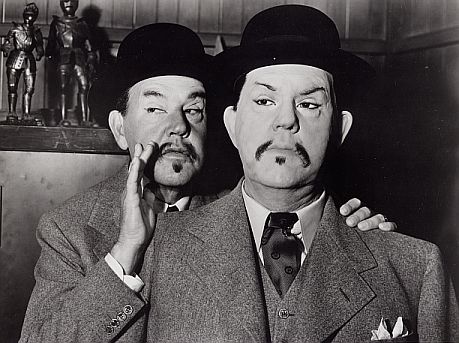
"It is not all unreasonable for the laundryman to require the customer claiming laundry to present a ticket because without it, locating the customer’s clothing is made difficult. Furthermore, someone might claim clothing that did not belong to them. But no Chinese laundryman would have used the phrase, “No tickee, no washee,” or its other forms, “No tickee, no laundee”, or “No tickee, no shirtee” to make this point. The phrase is just one example of the way whites often fabricated pidgin English terms to make fun of the difficulty Chinese had in pronouncing English."The English probably tease the pronouciation from the sing song girls yelling from their cribs, "Two bittee lookee, flo bittee feelee, six bittee doee!"Can you think of other phrases that might have come from Chinese Pidgin?
sources : Tickets to Gold Mountain , wikipedia
Thursday, January 8, 2009
Cherry Coal Mine Disaster
One of the most tragic coal mine fires in history. This story is very interesting. If you'd like to know more, please read written by Karen Tintori, a descendant of one of the victims, who tells the story of the mine and what happened to those 12 men who were trapped in the mine for days.
written by Karen Tintori, a descendant of one of the victims, who tells the story of the mine and what happened to those 12 men who were trapped in the mine for days.Friday, January 2, 2009
The Cat Organ
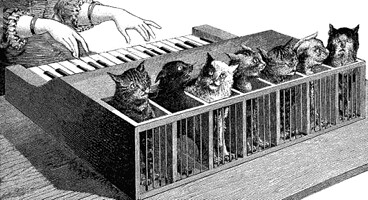 The cat organ is a hypothetical instrument consisting of a piano with cats lined up with their tales under the keys which were attached to nails. When a key is pressed, the nail would go into a cat's tail and then the cat would sound. The cats were arrange accordingly in the scale of an octave. First considered in the 18th century, it was later thought, during the early 1900's it had its use as a psychiatric treatment for people who had lost their attention spans. Once hearing "[...]A fugue played on this instrument--when the ill person is so placed that he cannot miss the expression on their faces and the play of these animals--must bring Lot's wife herself from her fixed state into conscious awareness"
Subscribe to:
Posts (Atom)